It's never been easy However, the financial landscape of 2026/27 offers a special set of challenges and opportunities. Inflation, fluctuating interest rates and the changing nature of job markets and the rapid development of new financial tools have altered how people make their financial decisions. The fundamentals remain very consistent. When you're starting to take a serious look at the financial aspects of your life or hoping to improve the habits you already have The following 10 personal finance tips will provide a firm starting of any person who wishes to make their money work harder.
1. Build An Emergency Fund Before Anything else
Each reliable piece of financial advise eventually comes back to this. Prior to investing, and prior to getting rid of debt before anything else, you need a buffer of financial funds. A minimum of three to six months' living expenses held in the savings account can provide protection against job loss unexpected expenses and other problems that undermine even the best laid financial plans. Without this foundation, a unlucky month can destroy many years of growth elsewhere. It's not the most exciting usage of money, but it's the most vital one.
2. Know Where Your Money Actually Goes
Most people have a general estimation of their incomes but an incredibly hazy understanding of their expenditures. The process of tracking spending, even for a single month, tends to reveal patterns that are genuinely surprising. Subscription services accumulate quietly. Food expenditure is typically underestimated. The small purchases we make every day add up more quickly than your intuition would suggest. Before establishing any type of financial plan, it's beneficial to establish an accurate base. Budgeting applications have helped make this easier than before even though a simple spreadsheet works just as well should you be prepared to keep it in use regularly.
3. Be able to tackle high-interest loans as a Priority
Obligation at high interest, especially on credit cards, is among of the most expensive investment choices. The interest rates for revolving credit can run to twenty percent or more annually, which means that every month that the balance remains unpaid, and the issue becomes worse. When you pay off debts with high interest, you can get the promise of a profit that is comparable to the interest rate charged, which is usually higher than any other investment option available at the same risk level. If several debts are in play it is either the avalanche system, targeting the highest rate first or the snowball strategy by clearing the balance with the lowest amount initially to build up psychological momentum can be a feasible structure.
4. Begin Investing Early and Stay Consistent
The principles of compound growth makes time more valuable than everything else. A consistent investment over a long period of time yields outcomes that outweigh larger sums invested later, even when return rates are minimal. If you wait until your finances feel safe enough to invest is a risk, as that threshold doesn't always happen by itself. Be consistent and start small during periods of market volatility, will help you build an investment portfolio that produces financial returns, as well as the discipline that ensures long-term wealth accumulation. Index funds and low-cost portfolios remain the most secure foundation for the majority.
5. Maximise Tax-Advantaged Accounts
In most countries, there is a type of tax-advantaged savings and investment vehicle, whether that is a pension or an ISA, an ISA, a 401(k) or something similar. These accounts are specifically designed to ease the tax burden when it comes to long-term savings. failing to use them fully could leave money on table. Employer pensions, when they are available, will provide an immediate guarantee of a return on these contributions which no other investment will match. Being aware of the options available in the tax jurisdiction you reside in and using those accounts to the limits they allow before investing into tax-deductible accounts is among the highest-leverage financial decisions most people are able to make.
6. Protect Your Income With Adequate Insurance
Financial planning focuses on creating wealth, but making sure you protect what you already have is equally crucial. Life insurance, income protection insurance and critical illness insurance are consistently undervalued until the moment they're required. Anyone whose family's financial situation is dependent on their income as well as their financial security, the consequences of being unemployed due to accidents or illnesses can be catastrophic without appropriate cover and insurance. The routine review of insurance requirements and especially after major life events like the birth of children or taking on one, is a routine, but frequently overlooked aspect of sound financial planning.
7. Take Care to Consider Lifestyle Inflation
When income grows, spending is likely to increase with it and often without conscious thought. Upgrades to homes, vehicles vacations, and other habits that are in sync with earnings growth is one of the major factors that lead to people reaching middle in their lives with a large income but a lack of financial security. Be aware of which enhancements to lifestyles really bring value and which ones are just an easy way to go is the way to differentiate people who make money in the course of many years, and those who perpetually think they have enough money but never quite have enough.
8. Diversify your income whenever possible
Relying on a single source of income has more risk than before in an economy that continues to change rapidly. Establishing additional income streams whether via freelance work, a side business, investment income, or by monetising an skill, gives you a financial cushion and option. It does not require any dramatic changes or significant time investment to start. Many of the most reliable secondary income sources begin as simple side projects which increase gradually. It's the goal to lessen the vulnerability that comes with any single point of financial failure.
9. Review and negotiate recurring Costs on a regular basis
Fixed monthly expenditures like utility bills, insurance premiums mortgage rates, as well as subscription services are rarely optimized by computer. Providers usually reserve their top rates on new customers. This implies that loyalty is frequently punished rather than recognized. Making a habit of reviewing all major expenses every year and then negotiating with the provider whenever possible will result in substantial savings and requires little effort. The savings you make are not the most impressive on a monthly basis, but when redirected repeatedly it is able to grow into something significant over time.
10. Educate Yourself Continuously
Financial literacy is not simply a checkbox to mark once. Tax laws change, new products appear and economic conditions change and personal situations change. Individuals who are financially aware make better financial decisions more frequently in comparison to those who transfer their financial savvy entirely to advisors or depend on old-fashioned knowledge. This doesn't require any deep understanding. By reading a lot, asking great questions and maintaining a basic knowledge of how money, investing, debt and taxes interact will help you stay clear of the most costly mistakes and maximize the opportunities you have.
Good personal finance is more about not chasing down clever shortcuts and more about adhering to only a few solid principles consistently over a long period. This article will provide you with the necessary tips. To find more insight, explore the leading To find more detail, head to a few of these respected singaporepress.net/ for more information.
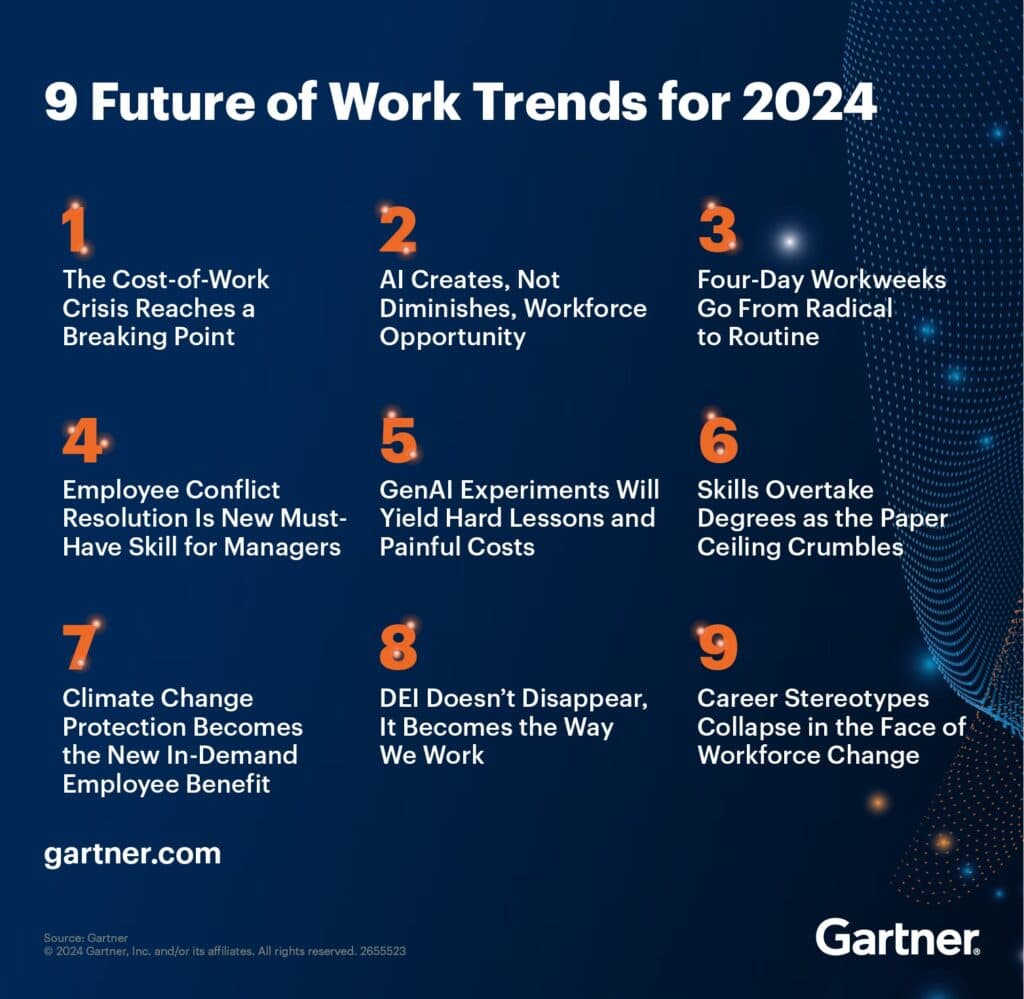
Top 10 Career Trends For A Changing Job Market In The Years Ahead
The current job market is undergoing one of the most important transformations in living memory. Automation and artificial intelligence are transforming which tasks require human intervention and which ones do not. The work environment has been changed due to hybrid and remote models that have loosened the link between employment and locations in ways that are still in play. The competencies employers most value are shifting faster than educational institutions are able to reflect. The relationship between individuals and their organizations is shifting of the long-term, mutual commitment model towards a less definite, more bargained and more dependent on an ongoing demonstration of value. Here are the top 10 career change trends that will affect the job market heading into 2026/27.
1. AI Literacy Becomes A Universal Professional Requirement
Being able to work effectively together AI tools is quickly becoming a norm for professional expectations across every industry rather than being a specialist ability confined to roles in technology. Understanding what AI can be able to do and not and creating efficient workflows and prompts, how to critically analyze AI-generated outputs and how you can integrate AI tools into professional practice effectively are all skills employers are beginning to treat as essential, rather than merely optional. The people who succeed aren't necessarily the ones who know AI most deeply at a technical level, but rather the ones who are able to combine solid expertise in their area with the ability to apply AI tools to benefit their field.
2. Skills-Based Hiring Cannot Replace Credential-Based Selection
An increasing number of employers are shifting away from using academic credentials as the sole determinant in hiring decisions, instead looking at proven skills and actual capabilities. The realization the fact that a copyright from the same establishment is a deteriorating proxy for the specific capabilities required by the job is driving investment in the development of skills assessments which include portfolio-based recruitment, work sample tests, and competency frameworks that examine what candidates are able to do, not the qualifications they have. This is for individuals. It's both a possibility and responsability: an opportunity to be competitive based on proven capability regardless of educational background and the obligation to grow and demonstrate this capability constantly.
3. This Half-Life Of Skills Shortens Dramatically
The rate at that certain technical skills become obsolete is rising, driven in part by the pace of AI development but also by the larger speed of change across all industries. Skills that were considered competitive when they were in use five years ago are standard requirements today, while skills which are at the forefront of technology today could be automated or replaced in the same amount of time. It is causing a paradigm change in the way that career advancement needs to be approached, from a model of acquiring skills that are fixed and then trading it off over time to one that is constantly learning, regularly skill reassessment, and proactive planning ahead of where demand is advancing rather than where it was.
4. Portfolio Careers And Non-Linear Paths Becoming Mainstream
The notion of a career progression that is linear through a single institution or even just a single field from entry-level until retirement no longer describes the way in which most workers' lives actually go, and it is losing its status as the aspirational default. Portfolio careers that mix multiple income streams, freelance work alongside employment, continuous shifting between different fields and extended breaks in order to attend school and caregiving or personal growth are becoming more popular and increasingly embraced as a result of the fact that employers have come to analyze diverse histories of careers as proof of apprehension rather than instability. Being able to communicate an unifying narrative that ties together diverse experience is becoming a key professional communication ability.
5. Remote And Distributed Work Reshapes Career Geography
The geographical constraints regarding career advancement have been relaxed substantially for positions that can be done remotely, and the implications of this are only just beginning to be revealed. Workers in smaller cities and regions are now able of accessing roles and businesses that have required relocation. Talent markets have become increasingly competitive since employers are able to hire globally instead of locally for many positions. The career advantages of being physically present in top professional cities have diminished for some positions, while being significant for others. The challenge of managing an occupation in a multi-faceted world choosing when proximity is crucial, when it does not and how to ensure accessibility and career advancement opportunities within organizations that are distributed, is a key and recent professional ability.
6. Personal Branding Changes From Optional to Essential
The recognition of an individual's abilities, perspectives and record of accomplishments outside the borders of their current employers is now a crucial career asset in ways which were not the case for a small portion of those in previous generations. Building a strong professional profile by creating content through public speaking and engagement, and active participation within professional networks is both security against the impact of changes within organisations and options that solely internal career development does not. This doesn't mean that you need to become a well-known social media celebrity. However, developing enough external visibility for opportunities as well as connections, collaborations and opportunities find their way to you independent of any one employer is becoming more common recommendation rather than an optional addition for the incredibly ambitious.
7. Emotional Intelligence And Human Skills Command is a high-end skill
As AI performs more cognitive tasks that previously required human experience, the capabilities that remain distinctively human will be rewarded with a rising value on the labour market. Emotional intelligence, the ability to comprehend, manage, and react appropriately to emotions from oneself as well, are among the frequently highlighted differentiators in roles that require direction, client relationships negotiation, team management and complex communication. Skills like creativity, ethical judgement as well as the ability to negotiate uncertainties, and to build genuine trust are all skills that AI can enhance rather than copy. Professionals who are able to combine understanding of the domain and technical aspects with well-developed human skills are now in the most defensible part of the market for employment.
8. Wellness and Psychological Safety have become Retention Imperatives
The main factors that influence talent selection have significantly shifted towards an improved working surroundings, the psychological wellbeing of your team, the professionalism of management, as well as the degree to which work aligns with the values of each individual. Compensation remains a key factor but is decreasingly effective as a retention tool for the experts most in demand. Organizations that invest in real wellness, in quality management with a culture that allows employees to can contribute fully and share their concerns with no fear is consistently better than those who rely on financial rewards all by themselves. For individuals, looking at the psychological context of an employer in the same way as applying for compensation and progress has become the norm for career advice.
9. Achievement of Mentorship and Sponsorship Impact
In a workplace characterized by constant change, the value of relationships with experienced professionals who provide insight and advocacy as well as accessibility to career opportunities that aren't easily accessible to the public has increased rather than diminished. Mentorship, which is where an experienced professional is able to share knowledge and offers guidance, and sponsorship in which a senior champion actively assists in opening doors and puts their influence behind advancing someone else's career Both are receiving renewed interest as career development instruments. Reverse mentorship, where more junior professionals share expertise in areas such as technology, social platforms, and emerging cultural trends with senior colleagues, is also growing as a valuable and relationship-building practice that benefits both parties.
10. Purpose And Meaning Drive Career Choices for a Growing Generation
The proportion of employees who make career choices heavily motivated by a desire to do an enjoyable job, a sense of alignment between personal values and the organizational mission, and the sense that their professional contributions are important beyond the value it brings to the business is growing. This is especially evident among young professionals, but isn't only a matter of age. Organizations that provide genuine goal-oriented conditions alongside competitive ones, as well as demonstrate the legitimacy of their mission statements rather than simply making them clear, tend to be more successful in attracting and keeping the best people capable of contributing to this mission. The interplay between career and purpose is not without its complications however the direction in which they the future of work is towards a workforce who is looking for more than a transaction and is increasingly willing choose actions that reflect that expectation.
Professional development in 2026/27 is going to require greater involvement, more constant learning, and more targeted self-direction than prior times in the history of work. The trends mentioned above don't make the road ahead easy however they make it simpler. Professionals who recognize where value is moving through the years, develop capabilities that will remain distinctively human, build visible expertise, and consider their careers as ongoing projects instead of fixed schedules will discover an abundance of opportunities more than worry. The job market is evolving fast, but it is not random. It has a trend and those who can identify it earlier will gain an advantage. To find more info, browse a few of these respected canadapolitics.net/ to learn more.